How to Build a 90-Day Marketing Plan for Sustainable Business Growth
Most marketing plans are doomed before they start due to one simple reason – the plans are made with the inappropriate time horizon in mind. A plan on a one-year period seems too abstract and detached from reality to be used in today’s world. While a to-do list on a weekly basis is too narrow to bring any tangible results. But the golden rule is 90 days – not too far away to miss the goal but not too close to lose the focus.
A 90-day marketing plan is a useful tool for organizations which would like to improve their visibility and attract qualified customers. It will help to convert these customers into sales and build a sustainable growth process. Instead of trying to cover all activities at once it is better to divide marketing actions into stages with the help of a 90-day plan.
It doesn’t matter whether it is a small business, eCommerce, service company, or startup – the 90-day plan will help you to concentrate your efforts on achieving the result.
This guide will help you craft a 90-day marketing strategy that is not only able to deliver results such as increasing traffic or sales in the short term but also helps create a solid foundation for exponential growth, which does not crumble the minute you stop advertising or publishing new content.
What Is a 90-Day Marketing Plan?
A 90 day marketing plan is a type of marketing plan that uses the 3 months period as its basis. It states what the company aims to accomplish, the marketing strategies that the company would employ, the target market, and how the success of the marketing campaign will be measured.This differs from a yearly marketing plan since it is too general and not easy to control.
The most common marketing channels require a minimum of a couple of weeks before they give any significant signal. The SEO content will require 60-90 days before it starts ranking. It will take some time for the paid campaign to be out of the learning period and start optimizing. Email nurture sequences will also require several sequences to reveal what works. 90 days will be sufficient to ensure that each of these channels can generate data but not too long so that you have to pick and choose rather than doing everything.
It also creates natural pressure. In a 90-day strategy, there will be a start, middle, and end — which means that you are building in checkpoints instead of waiting for something to work eventually. Growth sustainability is not about doing more marketing; it is about doing the right marketing and making adjustments quickly. 90 days is the shortest period that allows you to do it.
Why a 90-Day Marketing Plan Matters for Sustainable Growth?
Many businesses struggle with marketing because their activities are inconsistent. They may post on social media for a few weeks, run advertisements for a short period, or publish a few blogs without having a clear objective.
A 90-day marketing plan creates structure and accountability.
1. Creates Clear Direction-
A defined plan helps your team understand exactly what needs to be achieved during the next three months. Instead of spending time on activities that may not contribute to business growth, you can focus on high-priority tasks.
2. Makes Marketing More Consistent-
Consistency is important across SEO, content marketing, social media, email marketing, and advertising. A 90-day schedule ensures that marketing activities happen regularly rather than randomly.
3. Makes Results Easier to Measure-
Three months is long enough to collect meaningful performance data while still being short enough to make quick adjustments. You can compare results against your original goals and identify what is working.
4. Helps Control Marketing Costs-
A plan allows businesses to allocate budgets before campaigns begin. This makes it easier to identify which channels provide the strongest return on investment.
5. Supports Long-Term Growth-
Sustainable growth is not about achieving one successful campaign. It comes from continuously improving your marketing system. A 90-day plan provides a repeatable cycle of planning, execution, measurement, and optimization.
How to Build a 90-Day Marketing Plan?
Phase 1 (Days 1–30): Foundation and Research
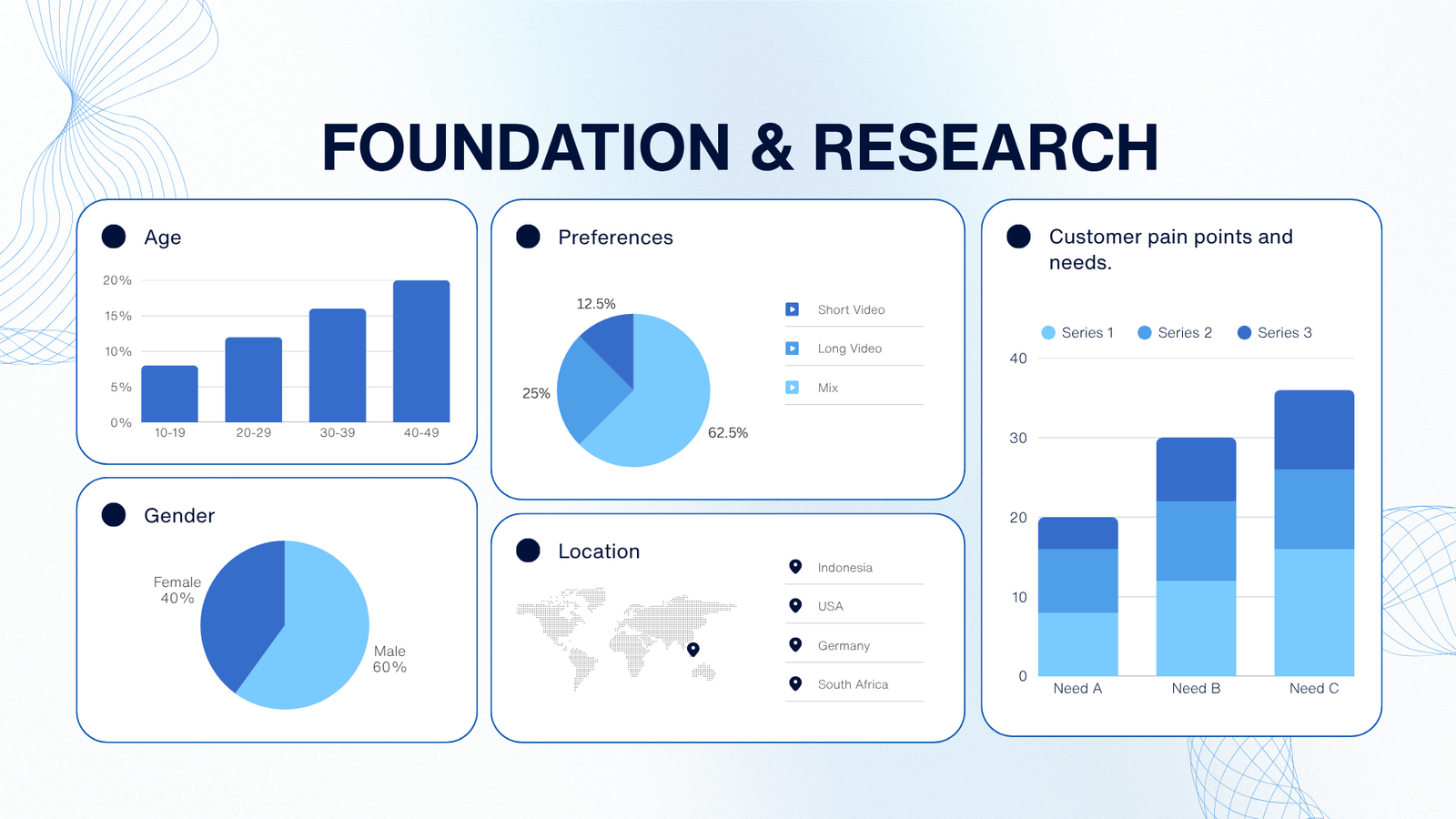
The most significant error that businesses tend to commit when it comes to quarterly planning is not laying down the groundwork before moving directly into the execution phase which includes social media posts, advertisements and emails. The first 30 days must be used to create a foundation where the other 60 days will not be futile.
Step 1: Get Brutally Clear on Your Ideal Customer-
Every effective marketing plan starts with a sharp understanding of who you’re actually trying to reach. This goes beyond basic demographics. You want to understand:
- What problem is this person actively trying to solve right now?
- Where do they go to find solutions (search engines, social platforms, communities, referrals)?
- What has stopped them from solving this problem already?
- What would make them trust a new brand enough to buy?
If you already have customers, talk to five to ten of your best ones directly. Ask what almost stopped them from buying, and what convinced them anyway. This single exercise often reveals more than weeks of market research.
Step 2: Audit What You Already Have-
Before attempting anything fresh, take stock of your current marketing assets—your website, social media presence, email subscribers, previously created content, customer testimonials, and any case studies. See what is currently doing well for you, no matter how small, and what is actively damaging you (an ineffective homepage, unengaged social media).
A simple audit checklist:
- Is your website’s value proposition clear within five seconds of landing on it?
- Which existing content or posts have gotten the most engagement or traffic, and why?
- Where are you currently getting customers from, even informally?
- What do competitors do well that you don’t currently do at all?
Step 3: Set 90-Day Goals That Are Actually Measurable-
Setting a general goal, such as increasing brand awareness or capturing more leads, doesn’t provide you with any framework to work against. In contrast, establish two to three goals in concrete, numerical terms for the quarter – for instance, boosting the number of email subscribers from 500 to 2,000, collecting 50 leads or improving website traffic by 40%.
Every goal will have an identified owner, starting point and will be measured on a weekly basis. Otherwise, there is no possibility of fixing any issue in time.
Step 4: Choose Two to Three Channels — Not Ten-
This is where companies often go wrong. The attempt to engage in content marketing, paid advertising, email marketing, social media marketing, SEO, partnerships, and events marketing all in one quarter almost certainly guarantees that you will do each badly. Growth through marketing depends on selecting a limited few channels where your ideal customer spends their time and concentrating intensely on those.
The test? For each marketing channel you want to consider, answer the question “Do we have enough resources to make this happen consistently over all 90 days, not just the first two weeks?” No? Drop it.
At the end of Phase 1, you should have:
– Customer avatar/ideal customer defined.
– A brutally honest analysis of your current marketing efforts.
– Two or three concrete goals.
– Two or three marketing channels selected.
Phase 2 (Days 31–60): Building and Launching
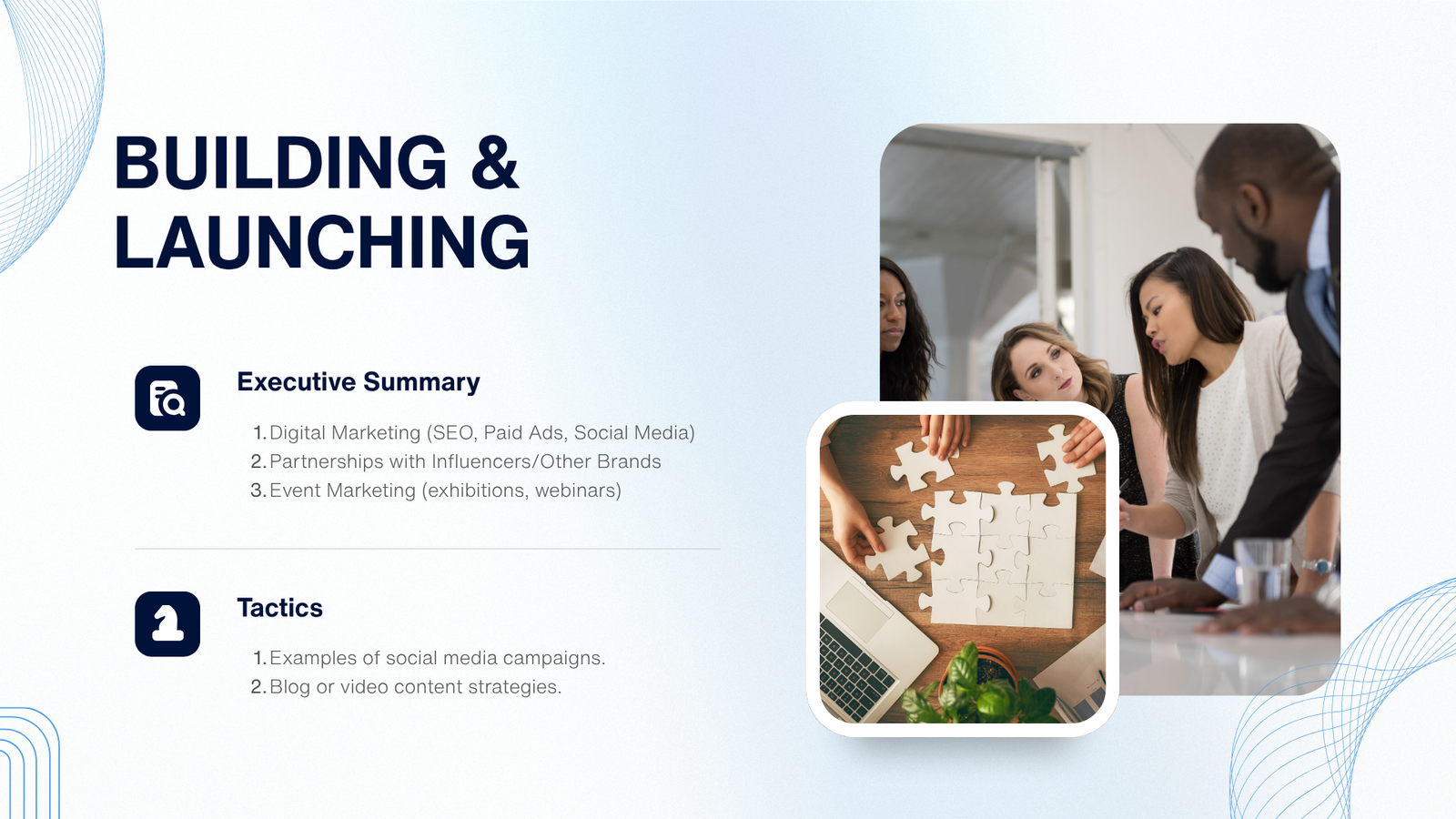
Now that the foundation is laid, the second third of the quarter is where the meat of building and executing campaigns, content, and systems happens.
Step 1: Map Out a Content and Campaign Calendar-
Regardless of what channels you decided on in Phase 1, lay out your plan in calendar form for the next 30 days. This includes when to post, what campaigns you’ll run, and who will execute each element. Loose ideas like “publish more on Instagram” are worthless without an actual calendar detailing what will be published when.
When it comes to content-driven channels (blog, SEO, social, and email marketing), consistency always trumps quantity. It’s better to maintain a regular cadence, such as twice per week, than to do ten in one day and then never again.
Step 2: Build Your Core Conversion Assets-
Traffic and attention are worthless if there’s nowhere for them to go. Before scaling any channel, make sure you have the basic conversion infrastructure in place:
- A clear landing page or offer for your main goal (signup, purchase, consultation)
- An email capture mechanism if you’re building a list
- A simple way to follow up with leads (even a basic automated email sequence)
- Clear calls to action across your website and content
Many businesses drive traffic for weeks before realizing their website doesn’t actually convert visitors into leads or customers. Fix this before scaling anything.
Step 3: Launch Small, Then Scale What Works-
Do not go all in with all the campaigns. Test run small budgets with your advertising campaigns. Create only a few pieces of content and see what people talk about before planning for the next thirty. This is not an issue of going slow; it is an issue of scaling what has not been proven yet.
Step 4: Set Up Simple Tracking-
You don’t need enterprise analytics to track a 90-day plan. At minimum, track:
- Where traffic and leads are coming from (source)
- How many people take your desired action (conversion rate)
- What it’s costing you per lead or customer, if you’re spending on ads
A simple spreadsheet updated weekly is far more useful than a sophisticated dashboard nobody checks.
By the end of Phase 2, your campaigns should be live, your conversion assets should be working, and you should have your first real data on what’s resonating and what isn’t.
Phase 3 (Days 61–90): Optimization and Scaling
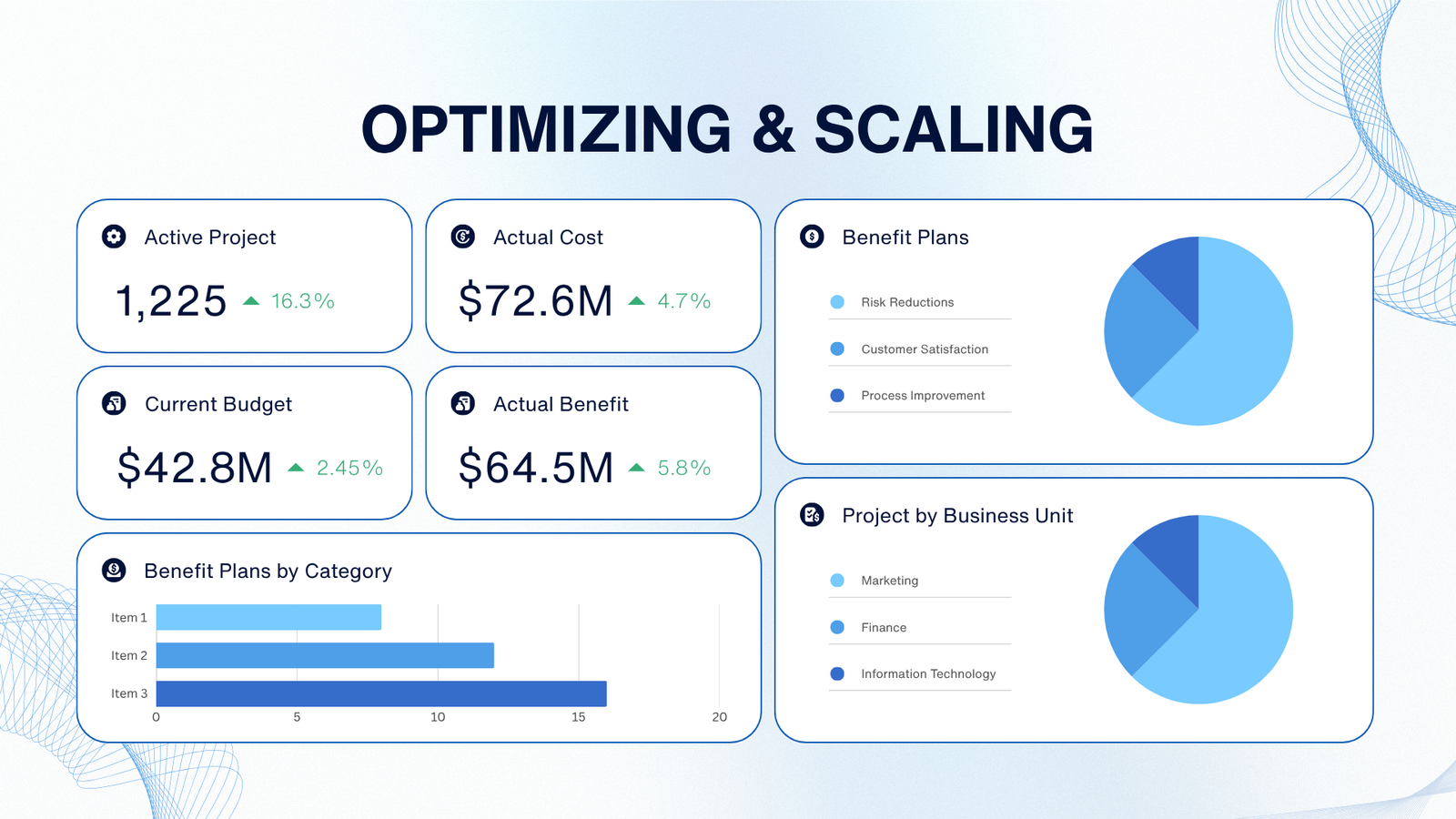
This is where sustainable growth is built in the last third of the quarter not by doing anything new but by focusing twice as hard on what the data tells us to keep doing and stop doing.
Step 1: Review Weekly Data Against Your Goals-
At this stage, there should be at least five to eight weeks of performance data in place. Channel by channel, be honest—does this really seem like progress towards your initial goals set out in Phase 1? The temptation might be to keep going due to having put effort into something, but real growth will require cutting off losing investments.
Step 2: Double Down on What’s Working-
No matter what form of media or kind of content it may be, pour in more efforts into whatever seems to be working best during those last few weeks. Should you see that certain posts on your blogs are getting an unusual amount of attention, then produce more content on those topics. Should you see that a specific ad is doing better than other ads, throw in more budget towards it. That is how you’ll get real growth for the quarter.
Step 3: Fix the Leaks-
Check your funnel starting with first contact all the way through to conversion, and identify where people are falling off. Leaks could be anything from confusing landing pages, not following up on leads, not clearly communicating your price point, to having an overly complicated checkout process. Solving just one of these leaks will have a huge impact, without adding a single new visitor.
Step 4: Document What You Learned-
This is the difference between having just a campaign and having a process that you can refine each quarter. Document in clear English: what went right, what did not go well, what you would change next time around, and what you want to try next quarter. This will become the first draft of your 90-day plan for next time.
Step 5: Set Up the Next 90 Days-
In the final week of the term, utilize all your learning experience and draw up your objectives for the next cycle. Growth that is sustainable is not just one 90 day period – it is many such periods, each period benefiting from the results of the previous one.
Common Mistakes to Avoid in a 90-Day Marketing Plan
Another common mistake is when one tries to achieve everything through overusing marketing media. In this case, time, money, and resources will be spread too thin, and one should focus only on those means of marketing communication that are more efficient in order to communicate with the target audience. One more mistake is making unrealistically high expectations regarding the results of marketing in a few weeks.
Trying to increase web traffic is also considered a mistake. Indeed, more traffic is good, but more visitors do not mean additional sales or revenues. Moreover, the focus on marketing efforts should include not only increasing traffic but also converting visitors into clients. In addition, ignoring clients may prevent the company from development because marketing efforts should include not only attracting new clients but also retaining clients, repeat purchases, referrals, etc.
Also, it is essential to make sure that you do not fail to monitor performance. Failure to track your marketing performance regularly means that you will be unaware of what is working and where the money that you have invested is going. Lastly, making hasty changes to your marketing strategy will mean that you are unable to measure its success. Strategies like SEO and content marketing take time to bear fruit.
How to Make Your 90-Day Marketing Plan Sustainable?
A 90-day plan is not aimed at creating a marketing boom for three months, but establishing processes that can go past three months.
How to Ensure Sustainability of Your Strategy:
1-Focus on Building Long-Term Assets-
Content, landing pages, email lists, customer databases, SEO authority – these assets will keep working for you.
2-Develop Replicable Processes-
Create documentation of how you build content, create campaigns, track their performance and optimize.
3- Use Data for Decision-Making-
Don’t depend only on your intuition. Use data such as analytics, customer insights, search insights and campaign performance to make decisions.
4- Customer Experience First-
Marketing strategy should attract customers, but great customer experience keeps them.
Ensure your website is user-friendly, your messaging is clear, and your sales funnel is simple.
5- Continuously Optimize-
Marketing should be treated as an ongoing cycle:
Plan → Execute → Measure → Optimise → Repeat
The end of one 90-day period should become the starting point for the next.
Final Thoughts
A 90-day marketing plan allows businesses to have a process-oriented strategy that allows transforming marketing objectives into actionable items. Rather than attempting to do all at once, it will be possible to lay a good groundwork, implement your marketing strategy properly and make improvements based on analytics.
The first 30 days need to concentrate on research and preparation. The next 30 days need to be concentrated on implementation and growth. The last 30 days must focus on the analysis of performance and improvement of campaigns and preparation for the next growth cycle.
The best marketing strategies are not those which have the biggest budgets. They are the strategies that know their audiences well, use the right channels, track the right KPIs and constantly improve.
By implementing a 90-day marketing plan, businesses will have the opportunity to develop a marketing system that will generate short-term and long-term results.
Frequently Asked Questions (FAQs)
What is a 90-day marketing plan?
A 90-day marketing plan is a three-month strategy that defines marketing goals, target audiences, campaigns, channels, budgets, KPIs, and timelines. It helps businesses organise their marketing activities and measure progress.
Why is a 90-day marketing plan important?
A 90-day plan provides clear direction, improves consistency, makes performance easier to measure, and allows businesses to adjust their strategy based on real results.
What should be included in a 90-day marketing plan?
A 90-day marketing plan should include business goals, target audience research, competitor analysis, marketing channels, content strategy, budget, KPIs, campaign timelines, and an optimisation process.
How do I set marketing goals for 90 days?
Set specific and measurable goals based on your current performance. For example, you could aim to increase qualified leads by 20%, improve organic traffic by 15%, or increase your website conversion rate.
Can small businesses use a 90-day marketing plan?
Yes. A 90-day marketing plan can be particularly useful for small businesses because it helps them prioritise limited time and resources. Small businesses can focus on a few high-impact channels instead of trying to use every marketing platform.
How often should I review my 90-day marketing plan?
Review your performance at least once a week and conduct a more detailed review at the end of each month. At the end of 90 days, evaluate your overall results and use the findings to create your next marketing plan.