
Australian DTC Brands Tackling Rising Meta Ads Costs
For almost a decade, Meta Ads — Facebook and Instagram combined — were the default growth engine for direct-to-consumer (DTC) brands everywhere, and Australia was no exception. A Shopify store, a few scroll-stopping creatives, a modest daily budget, and a well-optimised pixel used to be enough to build a seven-figure business. That era is quietly ending.
Meta’s own ad platform data shows a steep climb in cost-per-thousand-impressions (CPM) throughout 2025 and into 2026, with global averages up roughly 20% year-on-year. For Australian direct-to-consumer brands, the pain is even sharper. Australia sits in the same “Tier 1” advertising bracket as the US and UK — meaning Australian advertisers are bidding in some of the most expensive auctions in the world, but against a domestic population of just 26 million. Smaller audience, premium pricing, fiercer local competition. It’s a brutal combination.
But if you’re running a skincare brand from Byron Bay, a fitness apparel brand from Melbourne, or a supplement brand from Perth, there’s a good chance that your CPA is going up despite not changing a thing when it comes to your creative, targeting, and offer. That’s not your fault — that’s just the structure we’re working with right now. And the wisest of Australian DTC players aren’t waiting around to see the CPMs go down. They are completely rebuilding their growth stack based on the following principle: Meta is no longer a cheap source of acquisition but simply one channel in a diversified and margin-focused marketing system.
In this blog, we explore the exact reasons behind the rising meta ads costs, how it has affected Australian brands more than others, and the ways through which DTC founders in Australia are protecting their unit economics in 2026.
Why Are Meta Ads Costs Rising for Australian DTC Brands?
The use of Meta ads has always proven to be an excellent means of reaching their potential customers via Facebook and Instagram for Australian DTC brands. Nevertheless, over time, the price of placing ads has increased, which makes it difficult for companies to achieve profit from the advertising campaign. In spite of the fact that Meta still provides targeting and AI-based advertising solutions, there have been certain changes in the market.
1- Increased Competition Among Advertisers-
Australian companies are increasingly putting money into Meta Ads. As competing DTC brands, eCommerce stores, and large retailers fight for attention from the same consumers, there is an increase in the need for advertising spaces. As Meta follows the principles of an auction system, high competition translates to high CPCs and CPMs. During big shopping periods like Black Friday, Cyber Monday, and Christmas, costs can even be higher.


2- Changes to Privacy and Tracking-
The privacy upgrades brought by Apple, along with the increasing number of data protection laws, have limited the availability of user information to use for advertising targeting. This has made it harder for Meta to correctly recognize the users with high conversion rates. Many advertisers find that their conversion rates and CACs are lower than before.
3- Rising Customer Acquisition Costs-
Consumers today are constantly bombarded with ads in the form of digital media, and therefore it is becoming increasingly difficult for marketers to catch the eye of the consumer. With consumers nowadays researching and comparing products on various platforms before purchasing, their decision-making processes have become longer, requiring DTC brands in Australia to spend more money on marketing.


4- Higher Demand During Seasonal Campaigns-
It is quite natural that the cost of advertising will increase during such times when there is a rush of consumers looking for some good deals to avail themselves of. In Australia, direct-to-consumer advertisers running campaigns in connection with promotions during holiday seasons or year-end deals will be facing high CPMs and CPCs.
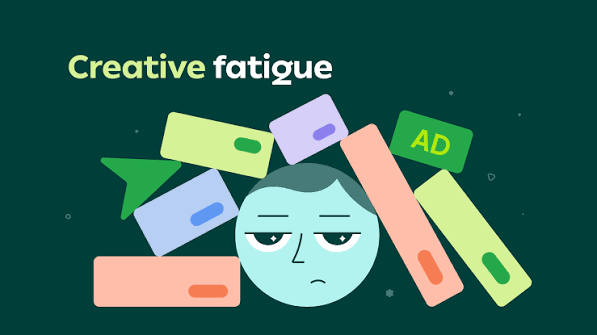
5- Creative Fatigue and Lower Ad Performance-
The continuous running of ads may result in fatigue of the creatives due to reduced audience response towards the advertisements. This affects the efficiency of the campaign, resulting in increased costs of marketing. Frequent update of the ad creatives through fresh images, video, and messages is therefore crucial in ensuring that campaigns remain efficient and economical.

6- AI Is Raising the Standard for Advertisers-
The AI-based optimization offered by Meta has gotten more advanced to give advertisers an upper hand if they have creatives of high quality, good content, and conversion cues. If brands do not adapt to AI changes, it becomes difficult for them to perform better or save on costs. Companies in Australia that use DTC and AI are most likely able to increase ROAS and reduce advertising costs
Why Are Meta Ads Costs Rising for Australian DTC Brands?
The use of Meta ads has always proven to be an excellent means of reaching their potential customers via Facebook and Instagram for Australian DTC brands. Nevertheless, over time, the price of placing ads has increased, which makes it difficult for companies to achieve profit from the advertising campaign. In spite of the fact that Meta still provides targeting and AI-based advertising solutions, there have been certain changes in the market.
1- Increased Competition Among Advertisers
Australian companies are increasingly putting money into Meta Ads. As competing DTC brands, eCommerce stores, and large retailers fight for attention from the same consumers, there is an increase in the need for advertising spaces. As Meta follows the principles of an auction system, high competition translates to high CPCs and CPMs. During big shopping periods like Black Friday, Cyber Monday, and Christmas, costs can even be higher.
2- Changes to Privacy and Tracking
The privacy upgrades brought by Apple, along with the increasing number of data protection laws, have limited the availability of user information to use for advertising targeting. This has made it harder for Meta to correctly recognize the users with high conversion rates. Many advertisers find that their conversion rates and CACs are lower than before.
3- Rising Customer Acquisition Costs
Consumers today are constantly bombarded with ads in the form of digital media, and therefore it is becoming increasingly difficult for marketers to catch the eye of the consumer. With consumers nowadays researching and comparing products on various platforms before purchasing, their decision-making processes have become longer, requiring DTC brands in Australia to spend more money on marketing.
4- Higher Demand During Seasonal Campaigns
It is quite natural that the cost of advertising will increase during such times when there is a rush of consumers looking for some good deals to avail themselves of. In Australia, direct-to-consumer advertisers running campaigns in connection with promotions during holiday seasons or year-end deals will be facing high CPMs and CPCs.
5- Creative Fatigue and Lower Ad Performance
The continuous running of ads may result in fatigue of the creatives due to reduced audience response towards the advertisements. This affects the efficiency of the campaign, resulting in increased costs of marketing. Frequent update of the ad creatives through fresh images, video, and messages is therefore crucial in ensuring that campaigns remain efficient and economical.
6- AI Is Raising the Standard for Advertisers
The AI-based optimization offered by Meta has gotten more advanced to give advertisers an upper hand if they have creatives of high quality, good content, and conversion cues. If brands do not adapt to AI changes, it becomes difficult for them to perform better or save on costs. Companies in Australia that use DTC and AI are most likely able to increase ROAS and reduce advertising costs.
Top Strategies Australian DTC Brands Are Using to Reduce Meta Advertising Costs
Strategy 1: Diversifying Acquisition Beyond Meta
The biggest change that Australian DTC brands make in 2026 is consciously moving from Meta-only acquisition to a hybrid approach. It’s quite straightforward: when one channel becomes more expensive, the brand with the channel has nowhere to go. A brand with five channels may reallocate its marketing budget to the one that’s most efficient at the moment.
TikTok and TikTok Shop-In the Australian market, many brands start using TikTok not only as a discovery channel but also as a sales channel. The combination of in-app checkout, creator-generated content, and the fact that the algorithm of the platform still gives organic reach makes TikTok Shop cheaper compared to Meta for many first adopters at the moment. However, the difference in cost per acquisition will decrease over time due to growing competition.
Google Shopping & Search- For capturing high intent, low-funnel consumers, Google is a great supplement to the Meta discovery channel that focuses on top of the funnel. Brands use Meta to create brand awareness and Google to capitalize on it.
Affiliate and influencer partnerships- Performance-driven affiliate programs and micro-influencer seeding have been demonstrated to be much more cost-effective than paid social for numerous brands based in Australia, with influencer and creator-generated content offering a noticeably reduced CPA in comparison with the ad creative created by the brands themselves, where micro-influencers come at a fraction of the price of macro-influencers but outperform them in terms of engagement.
Email and SMS for lead acquisition- These channels, which are normally considered for retention purposes, are used for converting cold leads acquired via Meta at low prices through discovery.
These are not brands leaving Meta behind; they just do not allow Meta to be their one and only tool.
Strategy 2: Treating Retention as an Acquisition Strategy
When getting a new customer is becoming more expensive, the natural response is to maximize the value of that customer. The Australian DTC companies are investing heavily in retention infrastructure that used to be an add-on feature.
- Customer loyalty and subscription programs that secure repeat transactions and increase LTV, which entirely changes the CAC formula – a customer who makes four transactions per year is exponentially more valuable than a customer who made one transaction only.
- Email and SMS post-purchase flows aimed at securing the second and the third transaction from a customer without extra advertising cost.
- VIP tiers and communities that reward top-notch customers with additional benefits and transform them into organic advocates of the brand.
- Win-back campaigns aimed at returning lapsed customers, who are much cheaper than new customers obtained through cold traffic on Meta.
The common logic that dominates in the circle of Australian DTC operators nowadays is pretty straightforward: customer acquisition is costly but customer retention is where the margin lies. By increasing repeat purchase rate by just a couple of percent, brands can tolerate a 15–20% increase in CPM on Meta without harming their growth path.
Strategy 3: Fixing Measurement — From ROAS to MER
One of the subtler but equally critical changes among high-end Australian DTC teams is the way they’ve been gauging success.
Platform reported ROAS (return on ad spend) has been getting progressively less reliable following Apple’s privacy updates which killed clean attribution. Even Meta’s own dashboard has been taking undue credit for sales which would have come in organically via direct traffic, organic search or word of mouth.
To counteract that, growth teams are relying on the more straightforward, Marketing Efficiency Ratio (MER) – total revenue divided by marketing spend in every single channel – as the ultimate metric. It might be a blunt figure, but it is also an accurate one and prevents the brand from pouring money into a channel that looks highly efficient, but isn’t really delivering any incremental revenue.
As part of this, the brands are spending on:
- Server-side tracking (Conversions API), which helps in recovering the signal loss because of the privacy update of iOS and provides Meta’s algorithm with good quality data for bidding.
- First-party data capture – creation of owned databases of email, SMS and loyalty members so that the future target/retarget efforts don’t rely on their own audience data of Meta.
- Blend of attribution modeling – considering the customer journey through paid, organic and owned channels and not just considering the last-click.
This approach will not reduce the CPMs of Meta, but it prevents the brand from wasting the investment they have made in the channels/campaigns that are just appearing successful.
Strategy 4: Leaning Into UGC and Creative Diversity
Meta’s ad algorithm, based on the company’s Andromeda ad-rankings system, has increasingly been relying on creative cues for audience discovery over interest targeting.
To address these challenges, Australian DTC brands are:
- Generating many more variations of their creative – exploring multiple calls-to-action, creatives (Reels, Stories, static or video) and approaches simultaneously, as opposed to just running a couple of “hero” creatives for extended periods of time.
- Using a lot of user-generated content (UGC), which generally performs better than branded creatives on a cost-per-result basis while also being more affordable and quicker to produce.
- Setting up constant creative testing channels, treating the process of generating creative like a product in and of itself, not a campaign once per quarter.
- Taking content that works in an organic format (TikTok, Instagram Reels) and re-running them in paid placements on Meta because organic content which converts well tends to also convert well as an ad.
As for cash-strapped Australian entrepreneurs who do not have high production costs, the situation has balanced the odds for them somewhat – a professionally captured testimony video through an iPhone from a genuine customer is now more effective than an expensive studio commercial.
Strategy 5: Investing in Owned and Earned Channels
One of the biggest shifts in mindset when it comes to DTC brands in Australia is the shift from relying on “rented audiences” and having no other means of growing besides buying access to the platform’s users, to focusing on owned and earned channels that keep working for them instead of starting from scratch every month.
- SEO and content marketing in order to generate free search traffic that does not have a CPC.
- Building community through Discord/Facebook groups, ambassador programs, local events, and anything else you need to do in order to turn your customers into a growth engine themselves.
- PR and earned media, which is extremely valuable for the highly networked media and influencer environment in Australia, where one placement will be worth more than weeks of ads.
- Referral programs that make your customers actually work for you.
Of course, none of this can replace Meta instantly. But companies that started to do that 12-18 months ago have become the most protected against this year’s increase in CPM.
Strategy 6: Getting Smarter Inside Meta Itself
Diversification does not mean abandonment of Meta — for the vast majority of Australia’s DTC brands, Meta is the only channel that offers maximum scale and performance. Brands successfully navigating increased costs are simply learning how to optimise their Meta campaigns better:
- Rationalizing the account architecture — running fewer and properly resourced campaigns instead of numerous fragmented ad sets, providing more data per campaign to Meta’s optimisation algorithms.
- Using Advantage+ Shopping campaigns, which have come far and are now offering significantly cheaper cost-per-acquisition compared to manual campaigns for ecommerce brands.
- Allocating budget for Reels and new formats, which now offer cheaper cost-per-click compared to Feed placements as the competition for advertisers has not yet caught up with the growth of ad inventory.
- Monitoring leading indicators, not just CPA — such as first impression rate (its decline indicates that the audience has become saturated), which can warn about rising costs in advance, rather than react to the fact.
Getting the offer right before scaling the spend — testing pricing, bundling and promotions on low budgets before investing large amounts in scaling something that did not work out.


Common Mistakes That Increase Meta Ads Costs
Australian direct-to-consumer (DTC) brands often end up spending unnecessary money on Meta advertising due to mistakes they make unintentionally and thus decrease the effectiveness of their campaigns. One of the most frequent mistakes is choosing overly narrow audiences, and as a result, Meta’s AI does not have enough information to identify potential customers. Another mistake is using the same ad creatives for too long a time, which eventually leads to creative fatigue among audiences, and thus they start losing interest in ads, and Meta starts charging extra money for this.
Not paying attention to the performance of campaigns is another huge mistake that Australian companies make. They do not track such important metrics as click-through rate (CTR), cost per click (CPC), conversion rate, and return on ad spend (ROAS). The same happens when they send visitors to websites that are too slow or designed incorrectly.
Many DTC businesses also focus too heavily on acquiring new customers while overlooking existing ones. Retaining loyal customers through email marketing, loyalty programs, and remarketing campaigns is often far more cost-effective than constantly finding new buyers. At the same time, relying solely on Meta Ads without diversifying into channels like Google Ads, SEO, influencer marketing, or email marketing increases business risk if advertising costs continue to rise.
Finally, failing to test different ad creatives, headlines, audience segments, and calls to action can prevent businesses from discovering what performs best. Regular A/B testing, combined with the use of first-party customer data, helps improve campaign performance and reduce unnecessary ad spend. By avoiding these common mistakes and continuously optimizing campaigns, Australian DTC brands can control Meta advertising costs while achieving stronger long-term results.
Future of Meta Advertising for Australian DTC Brands
The upcoming trends for Meta Advertising for Australian DTC Brands will involve the use of artificial intelligence, first-party data, and personalization of customer experience. The rising meta ads costs also result in simple increase in advertising budget will not give any significant advantages in the future. Instead, businesses have to create high-quality ads, engage their customers and use AI technologies to optimize advertising campaigns on the go. Meta is constantly improving its machine learning technologies to make it easier for advertisers to automate the process of bidding, targeting and placing ads and receive higher ROAS.
Another big trend will be first-party data. With an increase in privacy regulation and lack of third-party tracking, brands will increasingly rely on the customer data they can collect themselves via website visits, email subscriptions, loyalty programs and purchase history. Using such data allows brands to personalize marketing campaigns, improve customer retention and lower the cost of customer acquisition. Short-form videos, UGC and authentic story-telling will continue to perform better than regular ads because they build customer trust and increase engagement.
It is clear that even the DTC brands of Australia will have to diversify their marketing approach as opposed to depending only on the ads offered by Meta. The integration of Meta ads with the use of SEO, Google Ads, email marketing, influencer marketing, TikTok Ads, and content marketing will ensure that firms get to reach their customers through multiple touchpoints without necessarily having to deal with the risks involved with the increasing cost of advertising. Firms that continually experiment with their creatives and customer journey and those that focus on building relationships as opposed to sales will thrive in the coming years on Meta.
Frequently Asked Questions (FAQs)
Q.1- Why are Meta Ads becoming more expensive for Australian DTC brands?
Meta Ads costs are increasing due to higher competition among advertisers, changes in privacy regulations, increased demand for ad placements, and rising customer acquisition costs. As more businesses compete for the same audience, advertising through Facebook and Instagram becomes more expensive.
Q.2 - What is a DTC brand?
A DTC (Direct-to-Consumer) brand sells products directly to customers through its own website or online store, without relying on traditional retailers or wholesalers. This allows businesses to build stronger customer relationships and have greater control over their marketing.
Q.3- How can Australian DTC brands reduce Meta Ads costs?
Brands can reduce costs by improving ad creatives, using first-party customer data, optimising landing pages, testing different campaigns, focusing on customer retention, and diversifying their marketing channels beyond Meta Ads.
Q.4- Is Meta Ads still effective in 2026?
Yes. Despite rising advertising costs, Meta Ads remain one of the most effective platforms for reaching targeted audiences. Success depends on using AI-powered optimisation, engaging creatives, and data-driven marketing strategies.
Q.5-What is ROAS, and why is it important?
ROAS (Return on Ad Spend) measures the revenue generated for every dollar spent on advertising. A higher ROAS indicates that your campaigns are delivering better profitability and marketing efficiency.
Q.6 Should DTC brands rely only on Meta Ads?
No. Depending solely on Meta Ads can increase business risk. Combining Meta Ads with SEO, Google Ads, email marketing, influencer marketing, and organic social media creates a more balanced and sustainable marketing strategy.
Q.7-How does AI improve Meta advertising campaigns?
AI helps optimise audience targeting, bidding strategies, ad placements, and creative delivery. It analyses campaign performance in real time and automatically makes adjustments to improve conversions and maximise return on investment.
Q.8-Why is first-party data important for Meta Ads?
First-party data, such as email subscribers, customer purchase history, and website behaviour, allows businesses to create personalised marketing campaigns. It also helps improve targeting accuracy while complying with evolving privacy regulations.
Q.9- What role does user-generated content (UGC) play in Meta Ads?
UGC, including customer reviews, testimonials, and product videos, builds trust and authenticity. It often achieves higher engagement and conversion rates than traditional promotional content, helping brands lower advertising costs.
Q.10- What is the future of Meta advertising for Australian DTC brands?
The future will focus on AI-driven campaign optimization, personalized customer experiences, first-party data, video content, and omnichannel marketing. Brands that adapt to these trends will be better positioned to maintain profitability and achieve long-term growth.
Conclusion
Increasing expenses for Meta ads have turned into one of the most pressing issues faced by Australian DTC brands, which makes the strategic and data-driven approach to digital marketing even more relevant. Although a more competitive environment, changes in the privacy policy, and growing customer acquisition costs have raised the prices for advertising on Facebook and Instagram, these processes also give businesses an opportunity to evolve. Companies that stick to outdated techniques or just raise their ad spend might experience problems related to profitability while the other ones will be able to succeed in the future.
As demonstrated by successful Australian DTC brands, the key to sustainable development does not consist in increasing investments but rather in investing wisely. Engaging ad creatives, AI-based campaigns optimisation, obtaining first-party customer data, enhancing the performance of landing pages, and focusing on customer retention can help in increasing the ROAS and maintaining low customer acquisition costs. The diversification of marketing activities by including such techniques as SEO, Google Ads, email marketing, influencer marketing, and content marketing helps in reducing the dependency on a particular platform.
With the introduction of additional AI-powered features and ever-evolving customer needs by Meta, brands that embrace flexibility and constantly adapt their campaigns will gain a big competitive advantage. Continuous testing, analytics, and personalization of the customer experience will become key factors that will help to improve the effectiveness of the campaigns and build strong customer relationships.
Overall, increased costs of Meta Ads will not hinder brand development but, on the contrary, will give reasons for creating an efficient and sustainable marketing strategy. Australian DTC brands that rely on creativity, data, automation, and customer-centric marketing will definitely be able to overcome challenges associated with advertising, make a profit, and grow consistently in 2026 and even later.
By embracing the changes of the digital environment now, businesses will be able to develop strong brands and attract loyal customers. Read More.